A Year In the Trenches
What I Learned From Working at Non-Profit Org for Autism


One year ago, I began working for a new nonprofit organization aimed at helping families with autistic children. We do medical evaluations, direct families to the right resources, and provide after-school activities. The needs are endless, so our programs and offerings keep growing.
This job represents yet another career shift for me; I’ve gone from professor to writer to nonprofit leader. In some ways, this is a continuation of work that I’ve always done. I’m still teaching and writing. I’m organizing panels of speakers. I give college advice. In other ways, it is brand new. I work within a medical office, which has its own jargon and norms.
My primary responsibility is to help parents solve all sorts of autism problems. School, paperwork, special camps, therapy — I send them to the right place and hold their hands when they cry. Because this is a start up, I do much more than that. I also set up the website, created a newsletter, assembled a mailing list, created new procedures, ran a webinar series, and produced publicity materials. It’s all hands-on-deck to get this operation off the ground.
It’s been all-consuming. Start-ups are always that way. My many side gigs and hobbies were put on hold. Friends were neglected. Newsletters aren’t happening regularly. But with a year under my belt, I’m able to step back and reassess.
Shifts in Perspective
It’s been good to step back and think how this year has shifted my perspectives. Things that used to make me crazy — national-level politics, gender politics, public policy, higher education, and schools. Things that make me crazy today — all that stuff, plus Medicaid, inequality, and disability issues.
I’ve always cared about kids, education, politics, and inequality, but now it’s not theoretical. Every day, I talk to moms from Newark who are on Medicaid and don’t speak English. I have a richer understanding of the challenges in those communities. Those moms have to navigate a new challenge —autism — while managing the regular challenges of poverty, poor education, language, complicated extended families, and more.
Research shows that many parents experience clinical levels of PTSD after hearing from a doctor that their child has autism. Parents know that this diagnosis will force them to reevaluate hopes and dreams for their children.
For low income family, that trauma is even more intense. They don’t have the bandwidth to provide a higher level of oversight and manage a heavy-duty therapy schedule in a studio apartment, with no means of transportation, three other children, and little income. Therapy companies have told me that their therapists won’t go into some apartments, because there are too many bugs. Families have no hope of advocating for a proper IEP, when the school can’t manage to educate any of the children in the building.
I’ve learned that poverty, language differences, and other challenges mean that I can’t lecture folks to adopt my middle-class parenting style. Research shows that autistic children benefit from 20-40 hours per week of high-quality, ABA therapy. Medicaid actually will pay for all that help, but families aren’t getting it. Low-income families cannot manage an intense ABA schedule.
While we didn’t do a million hours of ABA therapy, I quit my job to help Ian and spent countless hours helping him talk. Low-income families cannot provide their children with the same level of help that I gave Ian.
Without extra help, outcomes are less optimal. It’s a highly problematic situation. I don’t have answers.
Links
We have a loneliness epidemic. We have an overwhelmed parent epidemic. Could the two problems help solve each other? Great podcast by Celeste Davis, Matriarchal Blessing
Super depressing post by Andrew Yang about how AI is going to decimate the middle class, property value, and higher education. You should read it.
More depressing thoughts about AI from Yascha Mounk. He had AI write an academic paper on political theory for him in a couple of hours.
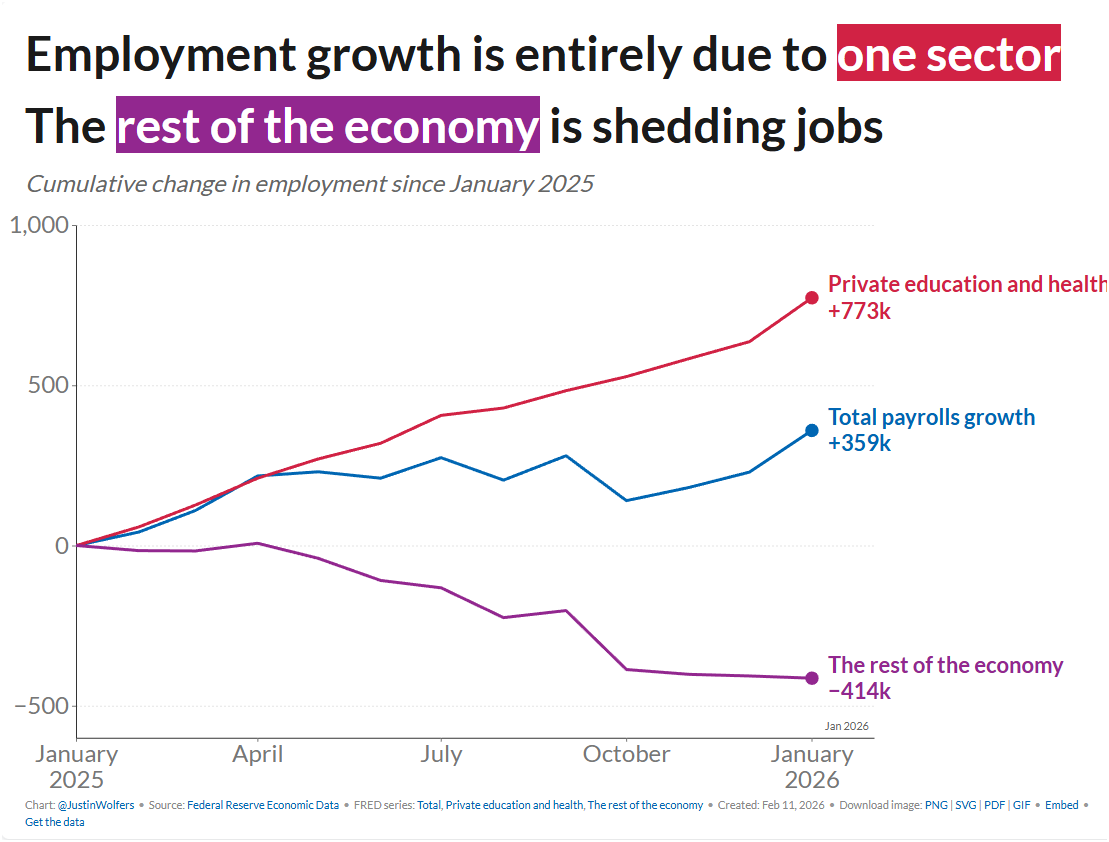
I need to talk about this chart.
Watching: The Pitt (so good)
Travel: Hawaii: here, here, and here.


